
 By
By As electric vehicles (EVs) become more common, many drivers—especially first-time EV owners—ask an important question: Are electric charging stations free in 2025? The short answer is sometimes, but most charging today involves some form of payment. Understanding when charging is free, when it costs money, and how pricing works can help you plan trips, manage costs, and avoid surprises.
This guide explains EV charging costs in 2025, where free charging still exists, how paid charging works, and what EV drivers should realistically expect.
Do Free Electric Charging Stations Still Exist in 2025?
Yes—but they are far less common than in the early days of electric vehicles.
Where free EV charging may still be available
- Some workplaces
- Certain hotels and resorts
- Retail locations offering charging as a perk
- Municipal or community charging programs
- Universities and hospitals
However, free charging is usually slow (Level 2) and intended as a convenience rather than a primary fueling option.
Why Most EV Charging Is No Longer Free
As EV adoption has increased, the cost of installing, operating, and maintaining charging stations has risen. Charging providers now need to cover:
- Electricity costs
- Equipment installation
- Maintenance and repairs
- Software and payment systems
- Site leasing or property agreements
As a result, most public chargers in 2025 operate on a paid model.
Types of Electric Charging Stations and Their Costs
Understanding charging levels helps explain why prices vary.
Level 1 Charging (120V)
Typical use
- Home charging
- Very limited public availability
Cost
- Often free if provided by an employer or institution
- Extremely slow charging
Level 1 charging is rarely offered publicly due to inefficiency.
Level 2 Charging (240V)
Where you’ll find it
- Shopping centres
- Hotels
- Offices
- Public car parks
Cost range in 2025
- Free (limited locations)
- Paid by time, session, or energy used
Level 2 chargers are the most common public chargers still occasionally offered for free.
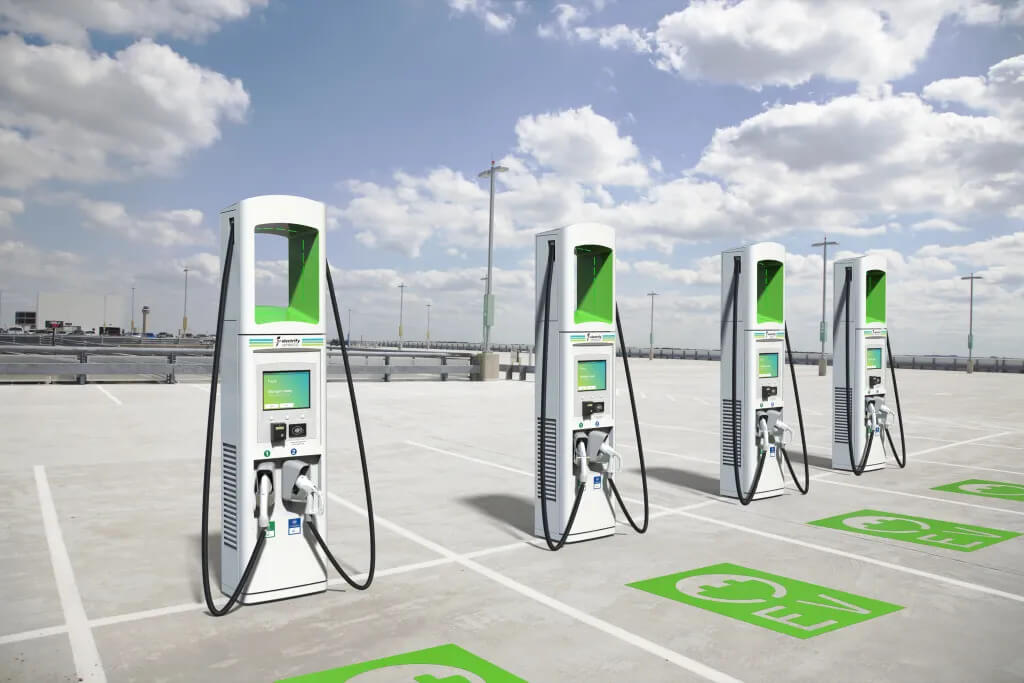
DC Fast Charging (Level 3)
Where it’s used
- Motorways and highways
- EV charging hubs
- Long-distance travel routes
Cost
- Almost always paid
- Higher rates due to fast charging speeds
DC fast charging is designed for convenience and speed, not free access.
Common EV Charging Pricing Models in 2025
Charging providers use different pricing structures depending on region and regulation.
Pay-Per-kWh (Energy-Based Pricing)
You pay for the amount of electricity used.
Pros
- Transparent pricing
- Similar to paying for fuel
Cons
- Rates vary widely by location
This model is increasingly common in 2025.
Time-Based Pricing
You pay for the time your vehicle is plugged in.
Pros
- Encourages drivers to move once charged
Cons
- Penalises slower-charging vehicles
Time-based pricing is still used in some regions.
Flat Session Fees
A single fee per charging session.
Pros
- Simple to understand
Cons
- May not be cost-effective for short charges
Often used at older or privately operated chargers.
Subscription or Membership Plans
Some networks offer discounted rates with monthly subscriptions.
Best for
- Frequent public charging users
- Long-distance commuters
Subscriptions can lower per-charge costs.
Major EV Charging Networks in 2025
Most public charging is operated by established networks.
ChargePoint
- Large network of Level 2 and DC fast chargers
- Pricing set by site owners
- Some free chargers still exist
Electrify America
- Focus on fast charging
- Almost entirely paid
- Ideal for long-distance travel
Tesla Supercharger
- Designed for Tesla vehicles
- Fast and reliable
- Paid pricing model in most regions
EVgo
- Urban fast-charging focus
- Paid charging with subscription options
Is Home Charging Cheaper Than Public Charging?
In most cases, yes.
Why home charging costs less
- Lower electricity rates
- No network service fees
- Off-peak pricing options
Home charging is typically the most cost-effective way to charge an EV in 2025.
How Much Does It Cost to Charge an EV in 2025?
Costs vary based on:
- Vehicle battery size
- Charging speed
- Location
- Electricity rates
General cost trends
- Home charging: Lowest cost per mile
- Level 2 public charging: Moderate cost
- DC fast charging: Highest cost
Even with paid charging, EVs are often cheaper to operate than petrol vehicles.
Are Free Chargers Worth Relying On?
Free chargers can be helpful—but they have limitations.
Common issues
- Limited availability
- Slow charging speeds
- High demand and wait times
- Time restrictions
Most drivers treat free charging as a bonus rather than a primary strategy.
How to Find Free EV Charging in 2025
If you want to locate free chargers:
- Check EV charging apps and maps
- Look for workplace or hotel charging
- Research local government programs
- Ask businesses about customer charging perks
Always verify availability before relying on free charging.
Hidden Costs EV Drivers Should Know About
Even when charging appears affordable, additional costs may apply.
Examples
- Idle fees for staying plugged in too long
- Membership fees
- Parking charges at charging locations
Reading station details in advance helps avoid surprises.
Are Free Charging Stations Declining?
Yes. The trend in 2025 shows:
- Fewer free public chargers
- More paid fast chargers
- Growing investment in reliable infrastructure
This shift supports network expansion and long-term reliability.
Will EV Charging Ever Be Completely Free?
Widespread free charging is unlikely long term.
Why
- Infrastructure costs
- Electricity pricing
- Growing EV demand
Free charging may remain as a promotional perk, but paid charging is now the norm.
Tips to Minimise EV Charging Costs
- Charge at home whenever possible
- Use off-peak electricity rates
- Compare network pricing
- Avoid unnecessary fast charging
- Unplug promptly to avoid idle fees
Small habits can reduce long-term costs.
Is EV Charging Still Cheaper Than Petrol in 2025?
In many regions, yes—especially with home charging. However:
- Fast charging can approach petrol-equivalent costs
- Savings depend on driving habits
EVs still offer cost advantages when charging is planned strategically.
What EV Drivers Should Expect in 2025
EV drivers should expect:
- Mostly paid public charging
- Faster, more reliable infrastructure
- Fewer free but higher-quality chargers
Convenience is replacing free access as the primary focus.
Final Thoughts
So, are electric charging stations free in 2025? Sometimes—but not usually. While a small number of free chargers still exist, most EV charging now operates on paid models designed to support expanding infrastructure and reliable service.
Understanding where free charging is available, how paid charging works, and how to manage costs will help EV drivers get the most value from their electric vehicles in 2025 and beyond.
Disclaimer: This content is for informational purposes only. Charging prices and availability vary by provider and region. Always check local charging networks for the most accurate information.