
 By
By Yes — you can remortgage online in the UK, and for many homeowners the process is now largely digital: you can compare deals, get an Agreement/Decision in Principle, submit an application, upload documents, track progress, and communicate with your lender through an online portal. Many lenders explicitly support online remortgage journeys (for example, Barclays and HSBC both describe online steps for remortgaging).
That said, online remortgaging doesn’t always mean 100% zero paperwork or zero humans involved. Depending on your lender, property, and circumstances, you may still need a conveyancer/solicitor, a property valuation, and identity checks — just handled in a more digital way than before.
This guide explains what you can do online, what may still require offline steps, and how to remortgage online smoothly in 2026.
What remortgage online really means
A remortgage is switching your mortgage to a new deal — either with your current lender (product transfer) or a new lender (full remortgage). The online part usually covers:
- Rate shopping and eligibility checks
- Agreement/Decision in Principle (AIP/DIP)
- Full application and document upload
- Messaging / status tracking
- Sometimes digital signing of the mortgage deed (increasingly common)
For example, Barclays outlines an online-style remortgage process that starts with an online AIP and continues through application.
What parts of a remortgage can be done online?
Compare deals and check eligibility
You can compare rates via lender sites, comparison sites, or brokers. Most lenders also let you check eligibility and affordability digitally (often with a soft search stage before a full application).
Get an AIP/DIP online
Many UK lenders now offer online AIPs/DIPs. Barclays explicitly notes that most lenders allow an online AIP.
Complete the full application online
Typically includes:
- Employment/income details
- Outgoings and commitments
- Property details
- Loan amount and term
Upload documents digitally
Most lenders use secure portals for:
- Payslips / accounts
- Bank statements
- ID and proof of address
Track progress and respond to conditions
Many delays happen when lenders request extra documentation. With an online portal, you can usually respond faster (and shorten timelines).
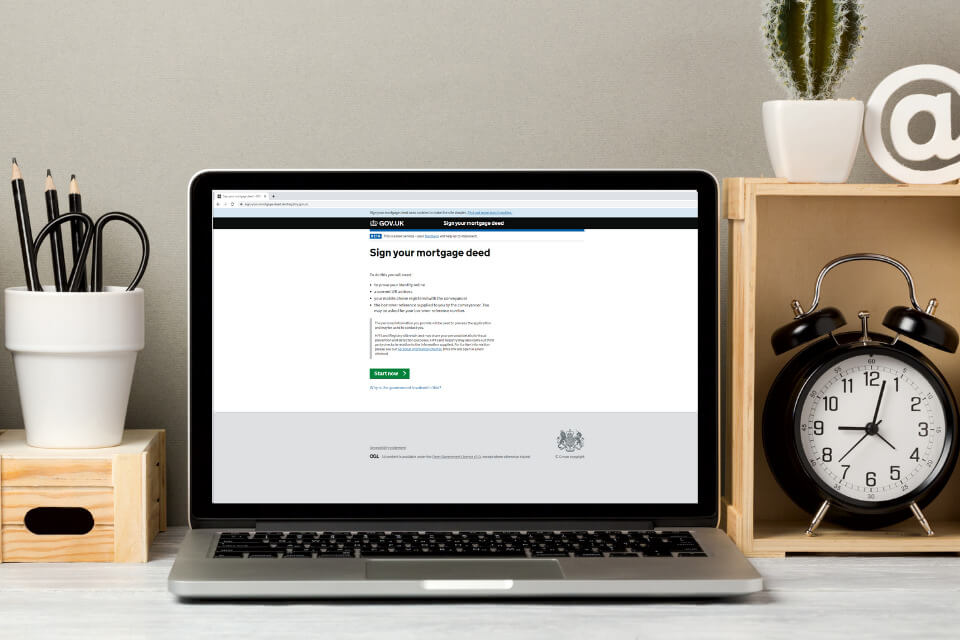
Sign the mortgage deed digitally
HM Land Registry has supported digital services like Sign your mortgage deed, which is designed to reduce paperwork and delays.
Whether you personally will sign digitally depends on:
- Your lender
- Your conveyancer
- The e-signature method they use
- What Land Registry will accept for that specific transaction
What might still require offline steps?
Even when you apply online, these parts can still be semi-online or handled by third parties:
Property valuation
Many remortgages use an automated valuation model (AVM) with no visit, but some need a physical valuation — especially if:
- The property is unusual
- You’re borrowing more (e.g., raising capital)
- The lender needs extra assurance
Legal work (conveyancing)
A full remortgage to a new lender typically involves legal checks and registration updates. The good news: many conveyancers run this mostly online now (email, portals, e-signing where available), but it’s still a legal process with steps that can take time.
Identity verification
Often digital, sometimes requires extra checks.
Step-by-step: How to remortgage online (2026)
Step 1: Start early (so you don’t fall onto the SVR)
Many lenders allow you to secure a new deal months before your current one ends, which can help you line up a switch smoothly. HomeOwners Alliance notes you can often start the remortgage process up to six months before your deal ends.
Step 2: Decide switch lender vs product transfer
- Product transfer: often faster, fewer checks, sometimes no legal work.
- Switching lenders: can unlock better rates, but usually involves legal work and more underwriting.
Step 3: Get an online AIP/DIP
Use the lender’s online tool (or broker platform). This helps you avoid wasting time on deals you won’t qualify for.
Step 4: Submit your online application + upload documents
Tip: upload clean PDFs and ensure your income/outgoings match what’s shown on statements. Consistency reduces back-and-forth.
Step 5: Valuation + underwriting
If the lender asks for extra documents (underwriting conditions), respond quickly through the portal.
Step 6: Legal stage and signing
Your conveyancer handles lender requirements and Land Registry steps. Where available, digital signing can reduce friction. HM Land Registry’s digital mortgage deed initiatives are intended to streamline this part of the process.
Step 7: Completion
Your new lender pays off the old mortgage and your new deal begins.
How long does it take to remortgage online?
Even with a digital process, a remortgage can still take weeks, mainly due to underwriting, valuation, and legal checks. HomeOwners Alliance notes remortgaging usually takes 4–8 weeks.
A product transfer with your existing lender can be much quicker (sometimes days), but timelines vary.
Is it safe to remortgage online?
Generally, yes — as long as you use:
- Official lender websites or reputable brokers
- Secure document upload portals
- Strong passwords and two-factor authentication where available
Avoid emailing sensitive documents unless the lender/broker specifically instructs and uses secure methods.
Do you need advice, or can you do it execution-only online?
Many online remortgages are execution-only (you choose the product yourself without regulated advice). The FCA’s mortgage rules include conditions for execution-only sales and guidance around how firms should handle these journeys.
In plain English:
- Execution-only can work well for straightforward cases.
- If your situation is complex (self-employed income, adverse credit, debt consolidation, interest-only, major changes), advice can reduce mistakes and improve outcomes.
Common mistakes
Comparing only the headline rate: Also compare arrangement fees, valuation/legal fees, and early repayment charges.
Waiting too late: Starting earlier reduces the risk of sliding onto a higher standard variable rate (SVR).
Choosing a deal that doesn’t fit your plans: If you might move soon, a long fixed rate with high ERCs may be costly.
Assuming online means no legal stage: Switching lenders usually still involves conveyancing and registration work.
FAQs
Can I remortgage completely online with no solicitor?
Sometimes — mainly if you’re doing a product transfer with your current lender. If you’re switching to a new lender, legal work is commonly required (though it may be handled mostly online through portals and e-signatures).
Can I sign remortgage documents online?
Increasingly yes, depending on lender/conveyancer workflows. HM Land Registry has supported online signing approaches for mortgage deeds as part of its digital services.
When should I start an online remortgage?
Often up to six months before your current deal ends, so you have time to process valuation and legal stages and avoid a gap.
Conclusion
Yes, you can remortgage online in the UK — and in 2026 the process is more digital than ever: online AIPs, online applications, document upload portals, and (in some cases) online deed signing.
The smartest approach is to start early, compare total costs (not just rates), and be ready for the few parts that may still require valuations and legal checks. Done well, an online remortgage can be quicker, clearer, and less stressful than the old paper-heavy process.